We use them to analyze data about our visitors, improve our website, display personalized content, and provide you with an excellent experience on our site. To learn more about the cookies we use, visit our settings page.


Sixteen years in education, eight of them at Heritage. Inga doesn’t fit the textbook image of a teacher – and she’ll be the first to tell you. “I think this was just meant to be,” she says about ending up in pedagogy. “I graduated from the Faculty of Philology in 2005, specializing in French and English, and I made myself one promise: I would do anything but teach.” For a while, she kept that promise – she worked as a translator in an international environment. Then, in 2010, almost by accident, she said yes to a French teaching position. “That’s when I realized this is what I was supposed to do with my life. It really was pure chance.”
She’s the teacher who walks into class and tells her students: “When I’m an old lady, you’ll be the ones making decisions for this country.” And she means every word.
Teaching that shifts perspectives
At Heritage, English isn’t learned through repetition and memorization. It’s learned through discovery. In IPC, her fourth graders spend six weeks deep in myths and legends – Greek mythology, Egyptian mythology, Chinese mythology, superstitions from cultures around the world. They look at the same subject from completely different angles and come away with a fuller picture. This way, “Friday the 13th” becomes a doorway into American history. An owl calling at night becomes a lesson in folk belief and critical thinking.
“The children don’t even realize they’re studying grammar or practicing listening skills,” Inga explains. “They’re just curious to discover the subject.” When kids are learning without knowing it, curiosity simply takes over.
Games with a purpose
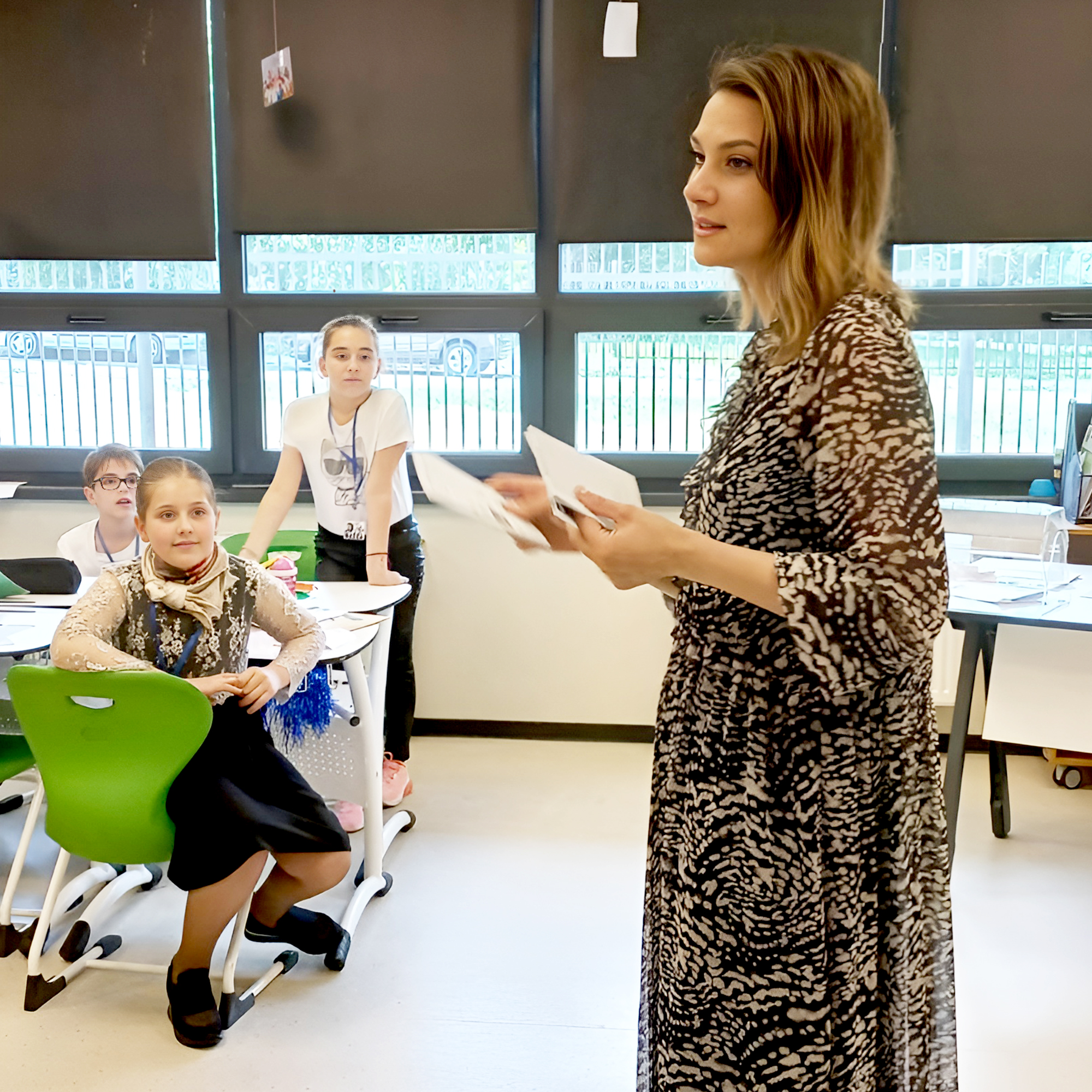
“The energy shifts instantly the moment it becomes a game,” she says. “And it doesn’t matter whether they’re in first grade or eighth – we all love to play.”
In her classroom, games aren’t just for fun. They’re intentional, structured, always tied to the learning objective. She always has a game up her sleeve: “Running Dictation”, where the text is posted at the far end of the hallway and students sprint to read and memorize it before rushing back to write it down correctly; “Gallery Walks” with QR codes hidden around the classroom for students to scan; role-playing games where written texts come alive as real conversations.
When Chicago met Chișinău
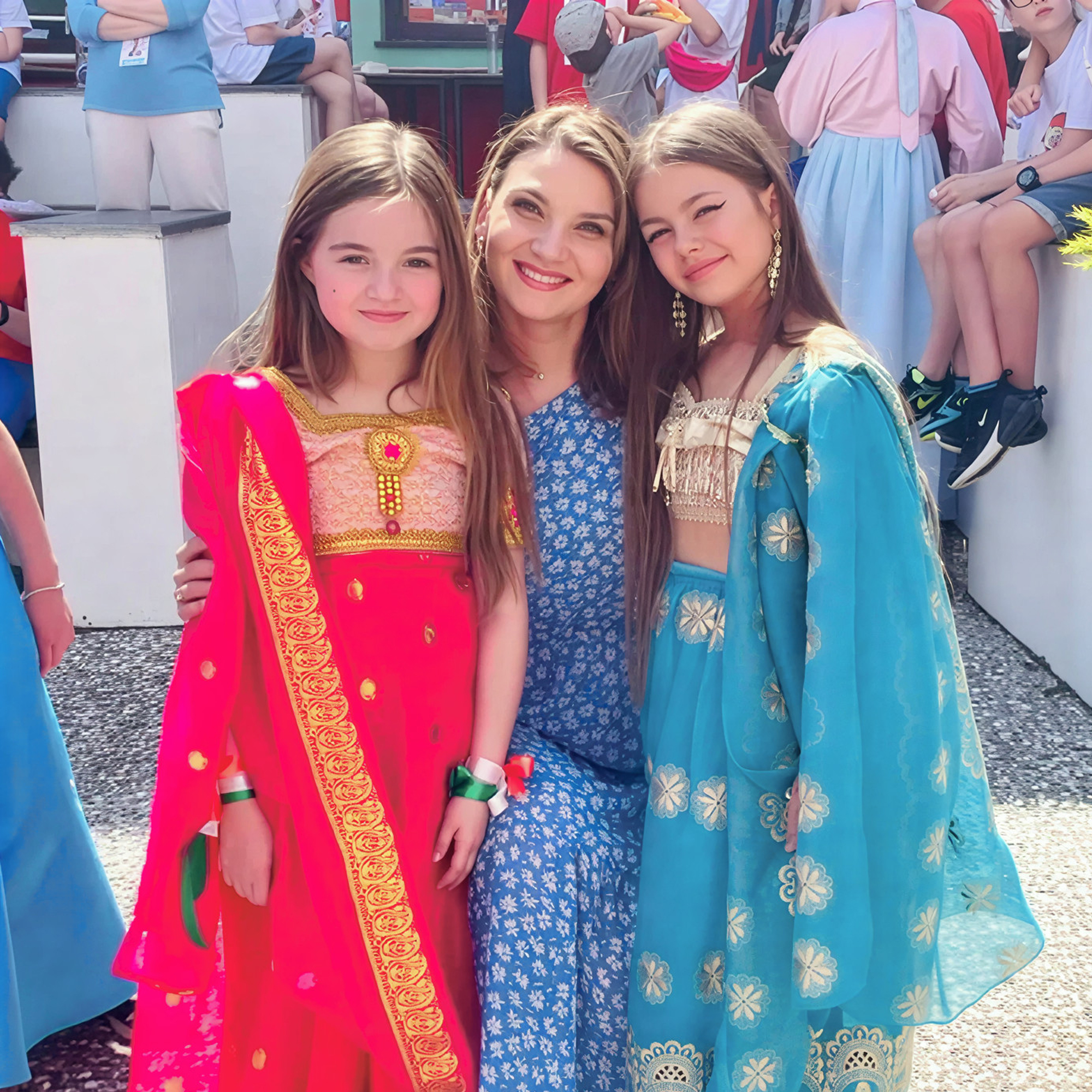
Heritage is part of the Transatlantic Educators program, and for four years now, Inga’s students have had real friends in Chicago. They swap packages full of sweets and small gifts, they share traditions, they read the same books at the same time on opposite sides of the Atlantic. For a child in Moldova, getting a package from America isn’t just a cultural exchange. It’s proof that the English they’re learning connects them to the rest of the world.
When Inga found out that the Mayor of Plainfield in Illinois had mentioned her partnership to the Speaker of the Moldovan Parliament, Igor Grosu, she felt the full weight of what she’d been building every single day. “It was an extraordinary moment for me. I found that American partner precisely because Heritage encouraged me to take the Transatlantic Educators course,” she says.
She also runs “Climate Action School” and the “SDG Project”, where students explore global sustainability goals, all entirely in English.
Empathy before grades
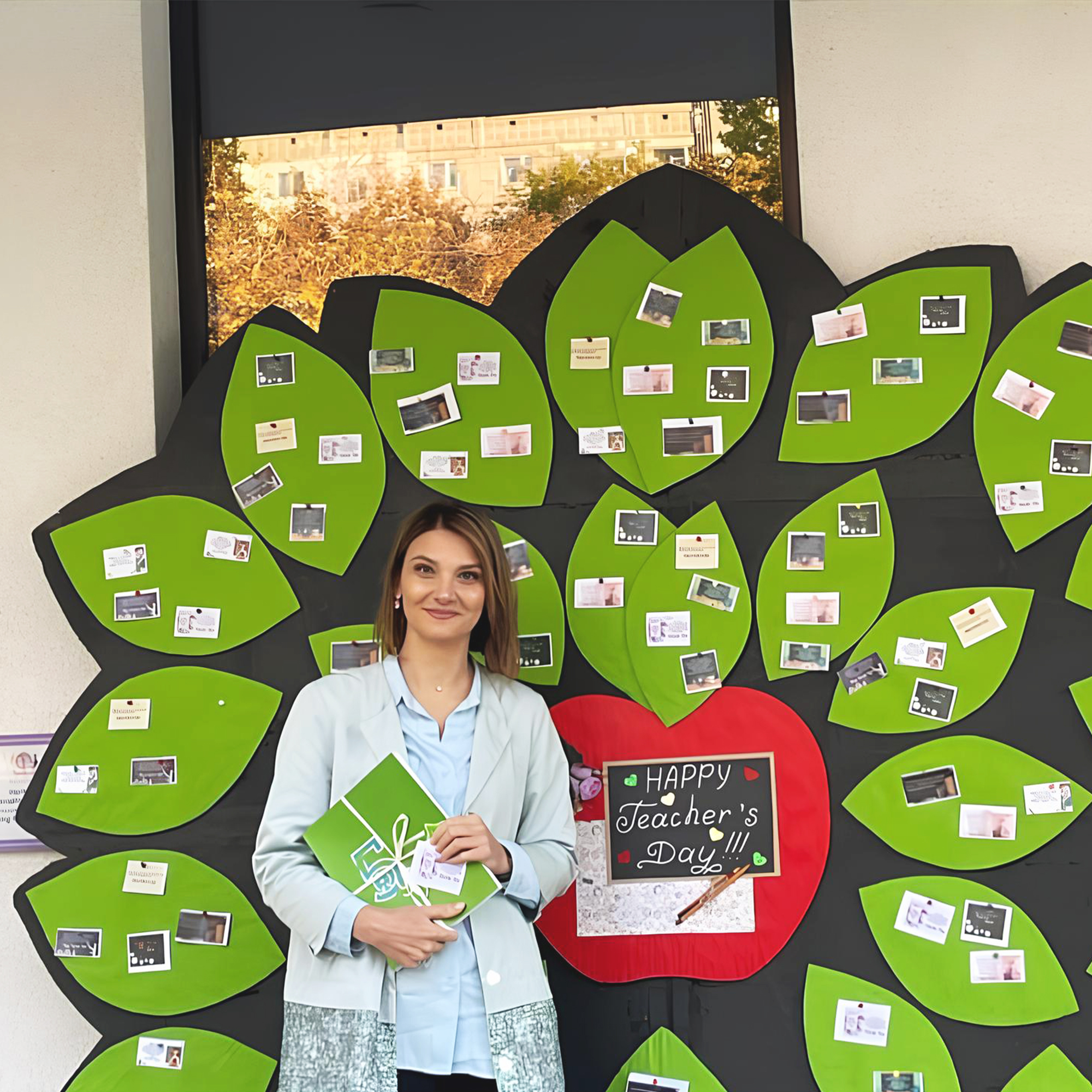
Inga has one golden rule she repeats to her students: “Come on, you can do it. And if not today, that’s okay – it happens.” In her lessons, through assessment for learning and peer assessment, feedback isn’t about pointing out what went wrong. It’s about showing what’s already going right. “If someone praises me, I fly,” she says. “We’re all like that.” That simple understanding of human nature changes the way children approach learning.
“I know a student has really learned something when they can explain it in their own words,” she says. She’s not looking for memorized answers – she’s looking for genuine understanding, for the ability to use knowledge in new situations, to make connections between ideas.
In an age of constant screens and shrinking attention, she understands that the most important thing a teacher can offer is an emotional connection. “Children sometimes think we’re robots. They imagine we don’t eat, don’t have our homes or worries. When we show them our human side – that we slept badly, that we make mistakes too – the wall comes down.” Because, as she puts it simply, “children are people, and they always know when a teacher is genuine and actually believes in them.”
When she talks about what she wants students to carry away from her classes, she puts communication first. “You opened your mouth – you passed the test,” she says, because speaking up is the first test any of us ever faces, in any room, in front of anyone. Beyond that, she works to build critical thinking, adaptability, and empathy – the skills she believes the 21st century actually demands.
Artificial intelligence as a tool
At Heritage, students learn to use artificial intelligence thoughtfully and with clear intention. “We shouldn’t ask it to read the good books for us,” Inga tells them. AI tools are exactly that – tools. They can free up time, and that time should go toward the things that matter more: reading, creating, thinking. “It’s the 21st century; we are so incredibly lucky,” she reminds her students. But the real luck in that classroom isn’t the technology. It’s a teacher who stays one step ahead, who keeps learning throughout her own life, and who shows children that education never really ends.
Heritage International School isn’t just about academic achievement. It’s a place where people grow. With teachers like Inga Corlăteanu – who teach with dedication and genuine warmth – every lesson becomes an investment in the future. In her classroom, you’ll find children debating, collaborating, moving around, asking questions. Kids who don’t realise they’re learning, because they’re too busy being curious. And who, years from now, might not remember the specifics of any particular myth or legend – but will remember how their teacher made them feel – seen, valued. Like they were already capable of becoming exactly who they wanted to be. And that’s the difference.
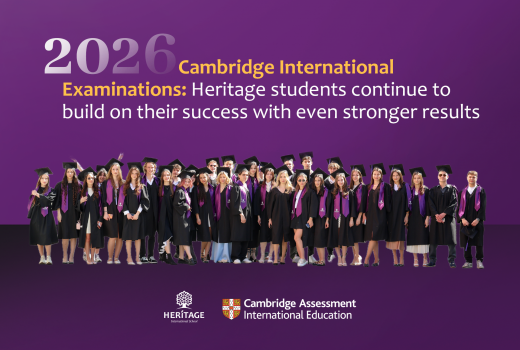
Academic rigor, curiosity, and consistent effort have paid off once again at Heritage International School. The results from the June 2026 Cambridge International examination reaffirm the caliber of
Heritage International School has become the first educational institution in the Republic of Moldova to achieve full accreditation from the Council of British International Schools (COBIS) after
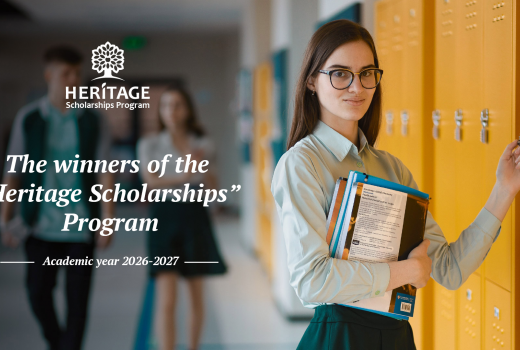
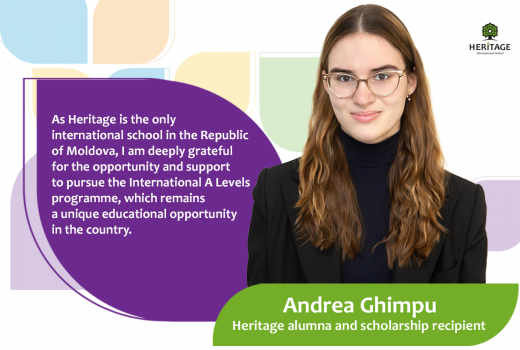
The Heritage Scholarships Programme 2026-2027 offers students from the Republic of Moldova the opportunity to study in an international educational environment and gain access to experiences that can
Heritage International School reminds students and parents across the Republic of Moldova that 14 June 2026 is the final day to apply for the 8th edition of the Heritage Scholarships Programme
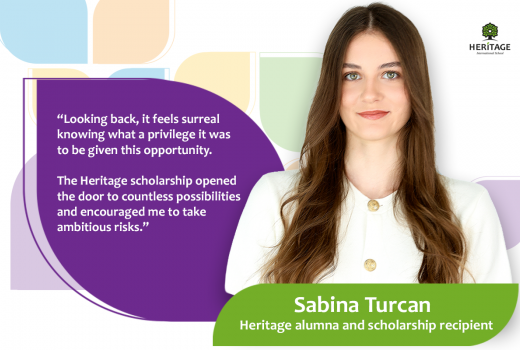
Heritage International School announces the launch of the 8th edition of the “Heritage Scholarships” Program for the 2026–2027 academic year and invites the most ambitious and dedicated students in
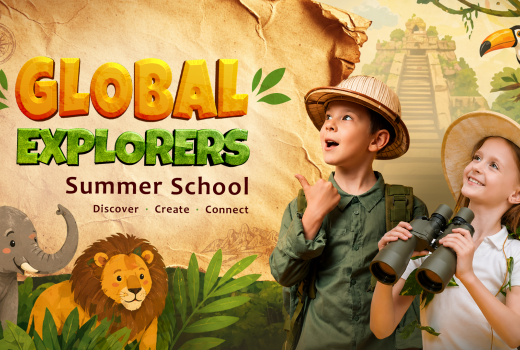
This summer Heritage International School is turning its campus into an expedition base, where every child aged 7 to 12 is invited to take part in this adventure. Heritage Global Explorers Summer
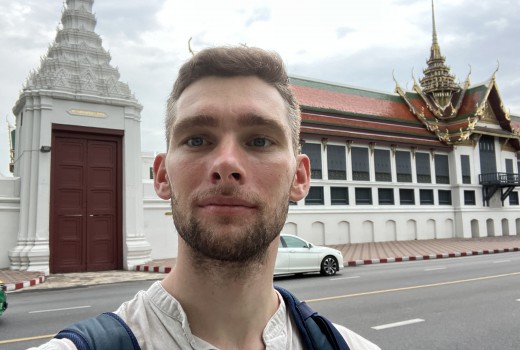
There is a small ritual at the end of many of Roman Dumych’s physics and geography lessons at Heritage International School. With ten minutes left on the clock and the day’s material covered, he
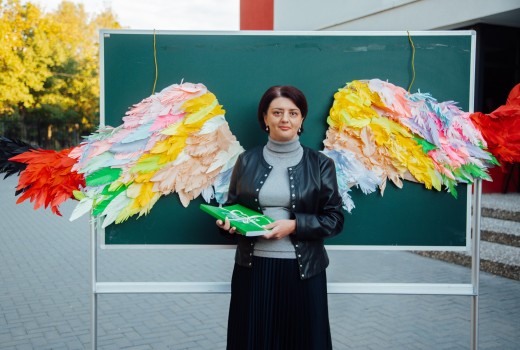
With over 25 years of experience in education, Victoria Fiodorov combines the academic rigor of law with the pedagogical sensitivity required for working with adolescents. After two decades spent in
How do we help young people grow into confident, grounded adults in a world that is changing before our eyes? It all starts with their courage to step outside their comfort zone and the way they
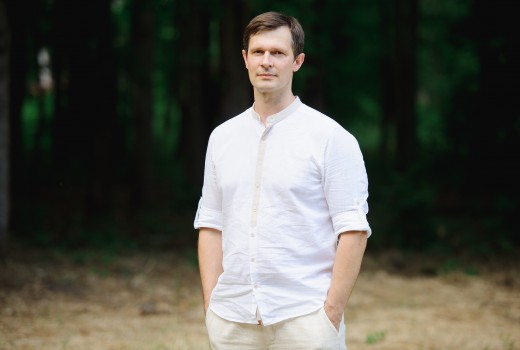
There are questions every parent asks, sooner or later, when choosing a school for their children. Beyond academic rigor and certifications, who are the people behind the lessons? What values guide