We use them to analyze data about our visitors, improve our website, display personalized content, and provide you with an excellent experience on our site. To learn more about the cookies we use, visit our settings page.


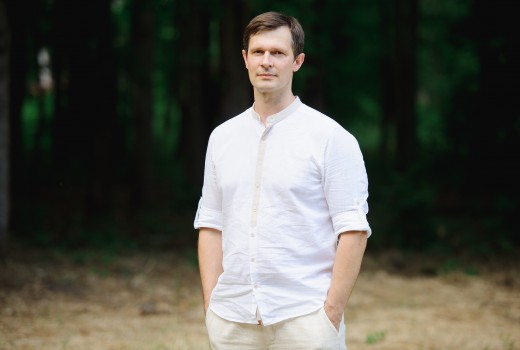
There is a small ritual at the end of many of Roman Dumych’s physics and geography lessons at Heritage International School. With ten minutes left on the clock and the day’s material covered, he divides the class into teams and fires questions at them – geography, science, anything that comes to mind. The team that wins gets treats from the school café.
It’s not a complicated teaching technique. It’s just a trivia game. But it is also a lesson in how a good teacher thinks: give students a reason to be curious, make the room feel a little competitive, a little playful, and watch what happens. This is what teaching looks like when it comes from someone who genuinely loves what he does. “It’s a simple game – there’s nothing special about it. But at the same time it makes them excited. And they learn,” he says.
Roman traces his love of geography to a single book, read at seven: the journals of Mykola Myklukho-Maklai, a 19th-century Ukrainian explorer who lived among the indigenous tribes of Papua New Guinea. “When I read his book, I was like – wow! I want to be like him!”
He did not end up in Papua New Guinea. But that spirit of curiosity about the world, about how places and people and physical forces connect to one another, has never left him. It shows up in how he teaches: always drawing lines between subjects, always asking students to see the bigger picture.
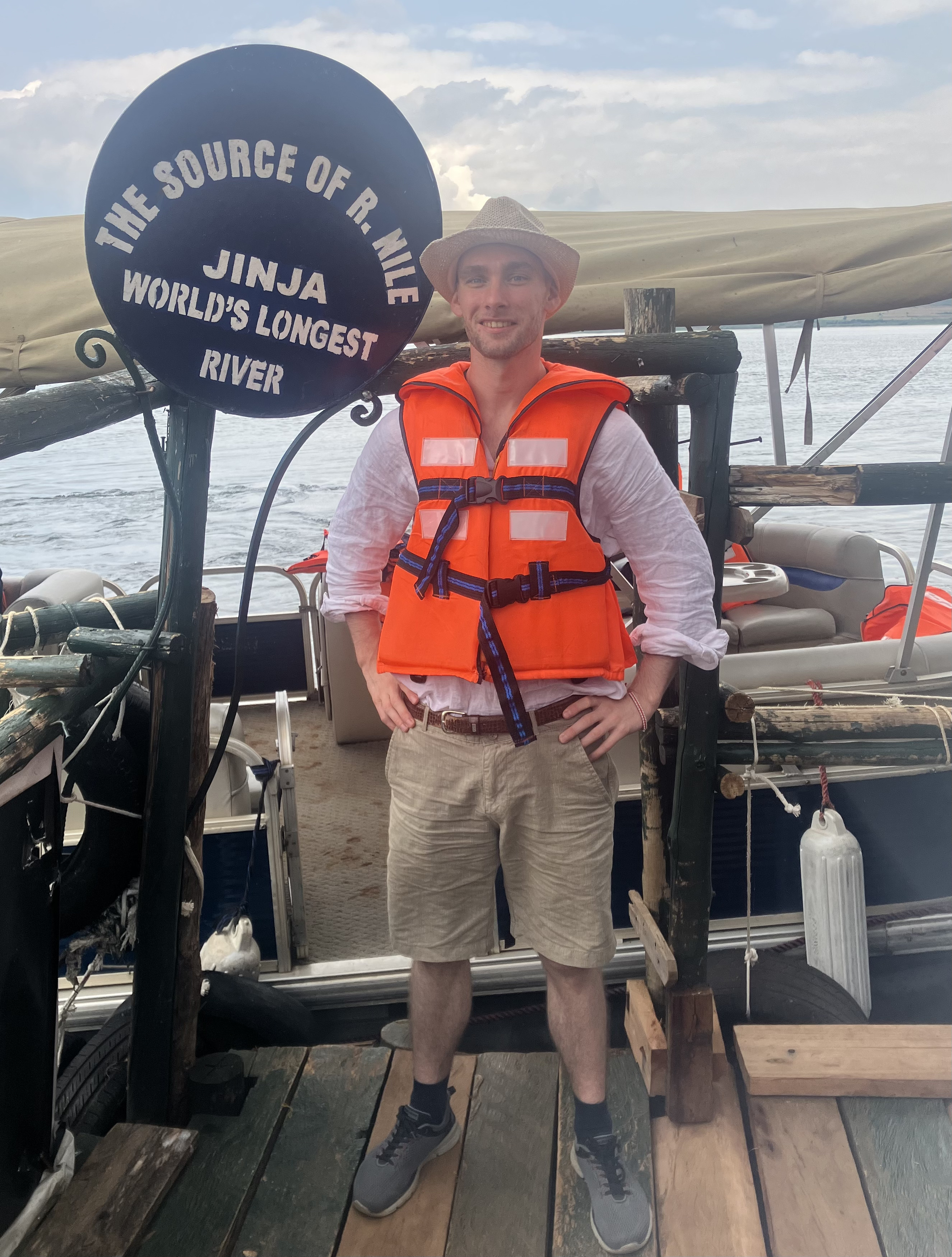
Roman’s path to Heritage was anything but direct. He has collected perspectives like others collect passport stamps. Originally from Lviv, Ukraine, where he earned his degree in geography from “Ivan Franco” National University of Lviv, and had a six-month Erasmus exchange in Italy, he spent three years teaching in Vietnam before making his way to Moldova.
Asia changed him in ways he still talks about openly. Vietnamese students, he explains, brought a particular kind of discipline and focus that he quietly carried back with him.
“Asian students are usually very respectful and disciplined. And it made me – if I see some patterns of behavior that I don’t like – try to be quite strict. But at the same time, our students here are more creative.”
When he began looking for his next move, he wanted somewhere closer to home. He considered Poland, Slovakia, Romania. But Heritage stood out – not just for a well-presented website, but for the way the school described itself. He joined the Heritage team three and a half years ago, and since then, he has not looked back.
Ask Roman what makes a great teacher and he will not mention lesson planning or curriculum design. He will tell you about staying calm. “My superpower is – I know how to be calm and I know how to deal with my emotions. Because of this, I can make my students feel safe.”
It sounds simple. It is also, in practice, one of the hardest things to do in a classroom full of teenagers. Roman has built a reputation among his students for fairness – the kind that does not waver even when a relationship is tense. He tells a story about a student in Vietnam, a boy named Lamanh, who seemed hostile for the first two months. Roman kept grading his work fairly. He kept showing up the same way every day. And then, gradually, something shifted. “At some point, he started to like my subject. And I feel like he started to like me as well.”
Roman teaches both geography and physics at Heritage, often to the same students. He sees this not as a logistical complication but as an opportunity: the two subjects speak to each other constantly.
Convection currents, for instance, appear in both – once as a physics concept, once as a force shaping weather systems. Roman makes a habit of pointing out these connections. “Do you remember we studied this in geography? Do you remember we did it in physics unit four?”, he asks them.
Roman does not wait for a test to know whether a student understands something. He watches. He makes eye contact. He notices how long it takes someone to read a question, how often they lean over to whisper to the person next to them. “Just because you ask a student if they understand, it doesn't mean they actually do. You have to look at their reactions. That tells you more than any test.”
This attentiveness extends to how he responds when a student is struggling. He does not call them out. He explains again, differently. And students, he says, notice and appreciate it – even if they never say so directly.
For structured work, he relies heavily on the Cambridge Support Hub – a platform where he builds assignments, runs brainstorming activities, and keeps students engaged with curriculum-aligned tools. It is, he says simply, very useful.
And then there is the club. Two years ago, Roman ran something unlike anything else on the timetable: a GIS club – geoinformational technologies – where students learned to work with the same mapping software used by urban planners and satellite analysts. The project that still comes up when he talks about it: a 3D model of two streets in Chișinău, Decebal and Dacia, built from scratch using real mapping data.
“It’s basically digital tools to work with maps and satellite images – everything that’s behind Google Maps on your phone.”
Roman has a clear philosophy about what school should and should not be trying to do. In an age when any question can be answered by a phone, he is less interested in transmitting knowledge than in teaching students how to question it.
“Knowledge is not the most important part anymore. What is important is how you analyze it, how you evaluate it – your critical thinking.”
For parents considering Heritage International School, Roman Dumych is perhaps the best kind of argument: a teacher who has seen the world, thought carefully about what education is for, and came to the conclusion that the most important thing a school can give a child has nothing to do with test scores.
“The main function of school is to make you a human being – a kind human being. I think this is the most important role of school.”
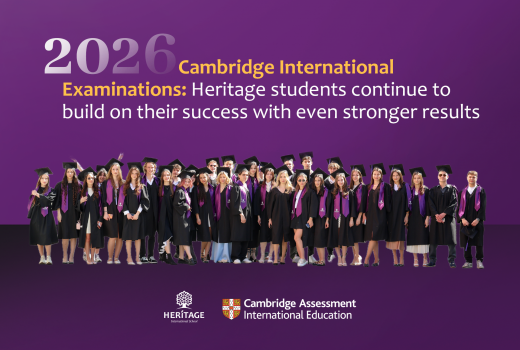
Academic rigor, curiosity, and consistent effort have paid off once again at Heritage International School. The results from the June 2026 Cambridge International examination reaffirm the caliber of
Heritage International School has become the first educational institution in the Republic of Moldova to achieve full accreditation from the Council of British International Schools (COBIS) after
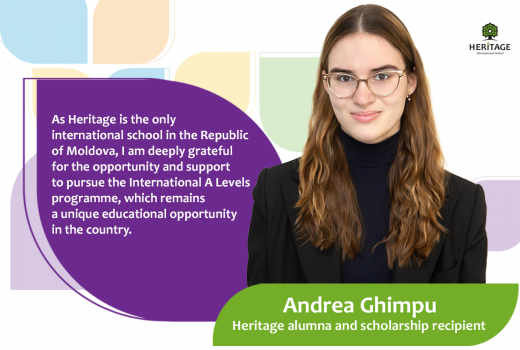
The Heritage Scholarships Programme 2026-2027 offers students from the Republic of Moldova the opportunity to study in an international educational environment and gain access to experiences that can
Heritage International School reminds students and parents across the Republic of Moldova that 14 June 2026 is the final day to apply for the 8th edition of the Heritage Scholarships Programme
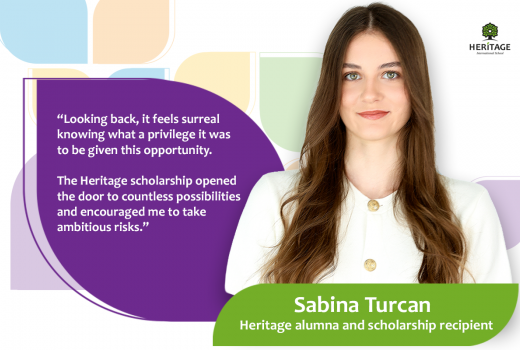
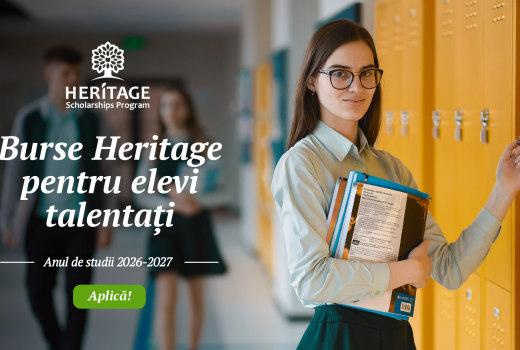
Heritage International School announces the launch of the 8th edition of the “Heritage Scholarships” Program for the 2026–2027 academic year and invites the most ambitious and dedicated students in
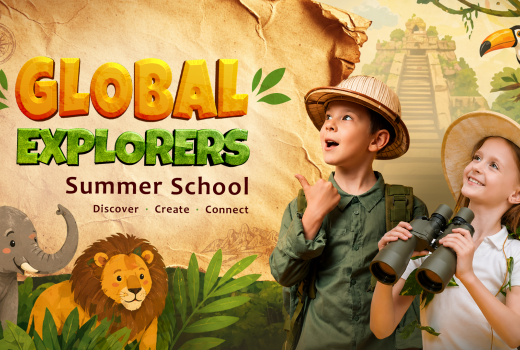
This summer Heritage International School is turning its campus into an expedition base, where every child aged 7 to 12 is invited to take part in this adventure. Heritage Global Explorers Summer
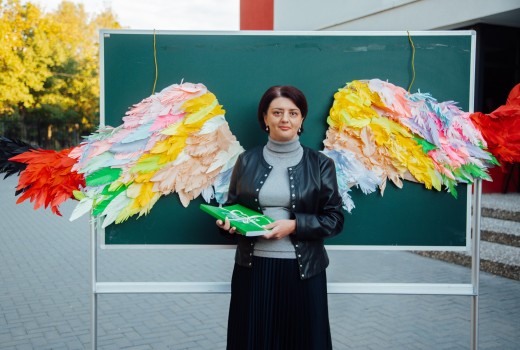
With over 25 years of experience in education, Victoria Fiodorov combines the academic rigor of law with the pedagogical sensitivity required for working with adolescents. After two decades spent in
How do we help young people grow into confident, grounded adults in a world that is changing before our eyes? It all starts with their courage to step outside their comfort zone and the way they
There are questions every parent asks, sooner or later, when choosing a school for their children. Beyond academic rigor and certifications, who are the people behind the lessons? What values guide
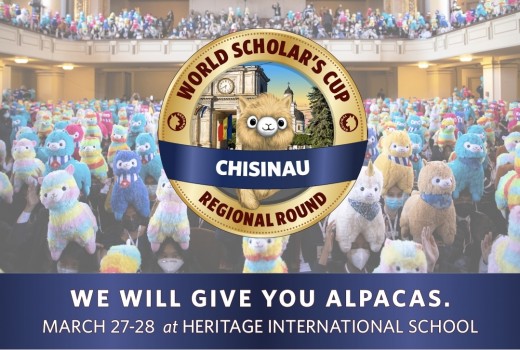
The international “World Scholar’s Cup” competition returns for the sixth consecutive year to Heritage International School, where all students from schools across the Republic of Moldova are invited