We use them to analyze data about our visitors, improve our website, display personalized content, and provide you with an excellent experience on our site. To learn more about the cookies we use, visit our settings page.


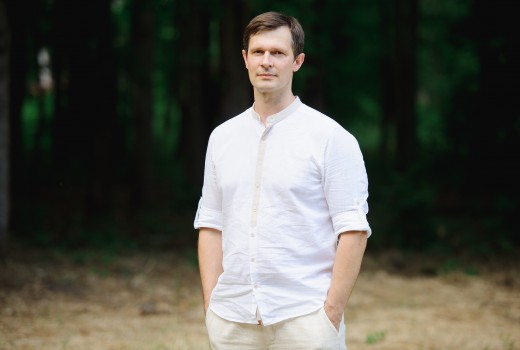
With over 25 years of experience in education, Victoria Fiodorov combines the academic rigor of law with the pedagogical sensitivity required for working with adolescents. After two decades spent in the university environment, she now teaches Law and General Paper at Heritage International School, following the Cambridge Assessment International Education curriculum, preparing students for top university studies anywhere in the world.
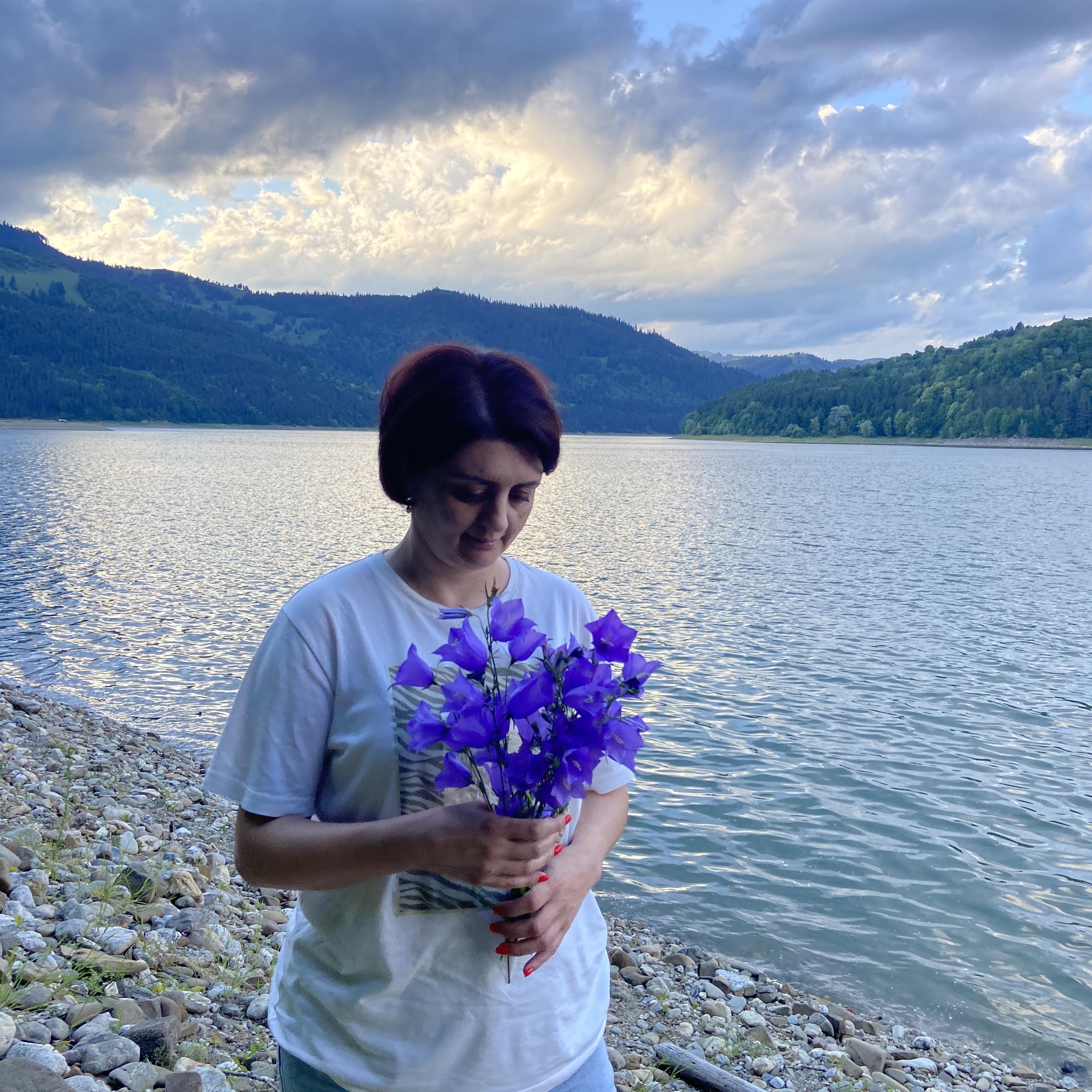
Her academic path is a complex one. She initially graduated from the Faculty of Foreign Languages and Literatures, specializing in Philology/English Language, and later – from the Faculty of Law, followed by a master’s degree and a PhD in law.
For over 20 years, she was a university lecturer at the Moldova State University, where she taught specialized English, civilization, and legal terminology. The decision to teach in an international school context was motivated by the desire to work with an authentic, flexible, and applied curriculum.
“The Cambridge curriculum offers the possibility of real in-depth study and practical application of knowledge. Students can focus on a narrow field, study it intensively, and understand whether this is their professional path,” says Victoria Fiodorov.
Students in grades 11 and 12 study Law eight hours per week – a volume comparable to the first years of university. In the first year, Victoria Fiodorov introduces them to fundamental concepts and legal institutions, and in the second year, she deepens the analysis, working at an advanced level. Thus, when Heritage graduates reach prestigious universities, they are already familiar with the language and structure of legal studies.
For Victoria Fiodorov, law is not just an academic discipline, but an indispensable tool for shaping informed citizens. In a context where the European integration of the Republic of Moldova, democracy, and international law are intensely discussed, the study of law provides students with the ability to understand how institutions, political processes, and the mechanisms of the rule of law function.
“In class, students study the British legal system, and for clarity and relevance, they often conduct comparative analyses with the legal system of the Republic of Moldova. This approach helps them identify differences, similarities, and institutional particularities,” Victoria mentions.
Although law involves rigor and strict rules, the classroom atmosphere is open and interactive. Discussions, debates, case analysis, comparisons between legal systems, video materials, and specialized educational platforms transform the lesson into a dynamic learning space.
“I encourage them to ask questions, not to be afraid to express their opinion. Progress comes through questions,” says the teacher.
Victoria Fiodorov strives to always stay up to date with developments in the educational field and combines classical teaching methods with modern tools, so that lessons are dynamic and accessible to all students.
“I frequently use quizzes and brainstorming-type games to facilitate the understanding of legal concepts. I am also subscribed to specialized legal educational platforms, which we use to create a more interactive approach and to stimulate students' active involvement,” she says. The small number of students and the 8 hours of classes per week allow her to track each student's progress in detail and to provide support where needed.
 Critical thinking – the essential skill of the 21st century
 In an era dominated by artificial intelligence and massive information flows, critical thinking is a top priority skill that Victoria Fiodorov constantly cultivates in her students in the General Paper subject. Students read articles from various fields – politics, health, culture, education – analyze contemporary topics, and participate in debates.
“Reading is the foundation. It develops both critical thinking and the ability to write with coherence and strong argumentation,” says Victoria.
In her classes, young people are shaped into individuals capable of thinking, analyzing, and making responsible decisions in a global society.
“I believe that the most important skill today is critical thinking, which allows students to differentiate between truth and lies. This competence will be useful to them in any field they choose, especially in a world flooded with information and technology. Therefore, the development of critical thinking is, in my opinion, the essential priority in education,” concludes Victoria.
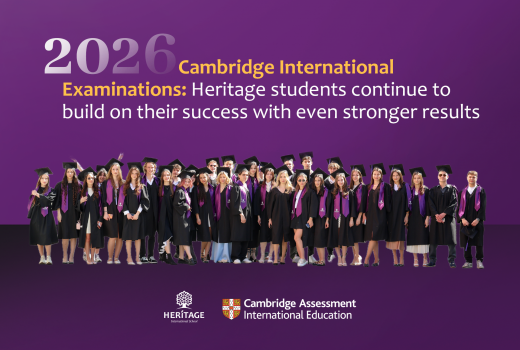
Academic rigor, curiosity, and consistent effort have paid off once again at Heritage International School. The results from the June 2026 Cambridge International examination reaffirm the caliber of
Heritage International School has become the first educational institution in the Republic of Moldova to achieve full accreditation from the Council of British International Schools (COBIS) after
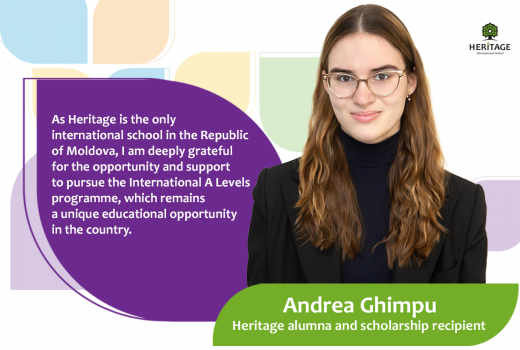
The Heritage Scholarships Programme 2026-2027 offers students from the Republic of Moldova the opportunity to study in an international educational environment and gain access to experiences that can
Heritage International School reminds students and parents across the Republic of Moldova that 14 June 2026 is the final day to apply for the 8th edition of the Heritage Scholarships Programme
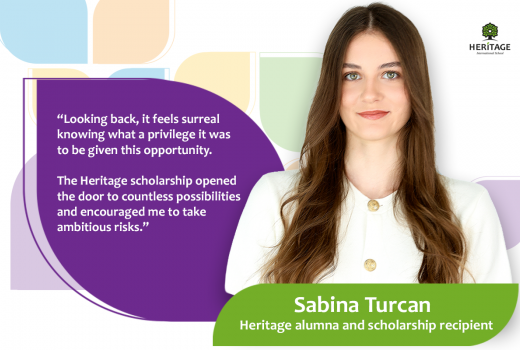
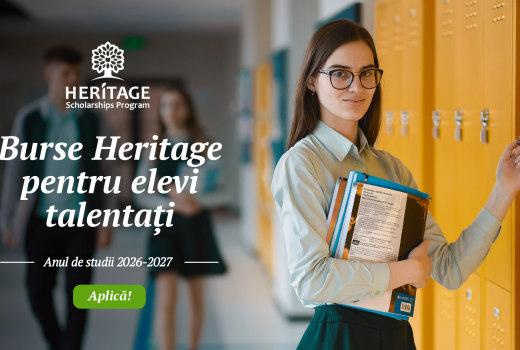
Heritage International School announces the launch of the 8th edition of the “Heritage Scholarships” Program for the 2026–2027 academic year and invites the most ambitious and dedicated students in

This summer Heritage International School is turning its campus into an expedition base, where every child aged 7 to 12 is invited to take part in this adventure. Heritage Global Explorers Summer
There is a small ritual at the end of many of Roman Dumych’s physics and geography lessons at Heritage International School. With ten minutes left on the clock and the day’s material covered, he
How do we help young people grow into confident, grounded adults in a world that is changing before our eyes? It all starts with their courage to step outside their comfort zone and the way they
There are questions every parent asks, sooner or later, when choosing a school for their children. Beyond academic rigor and certifications, who are the people behind the lessons? What values guide
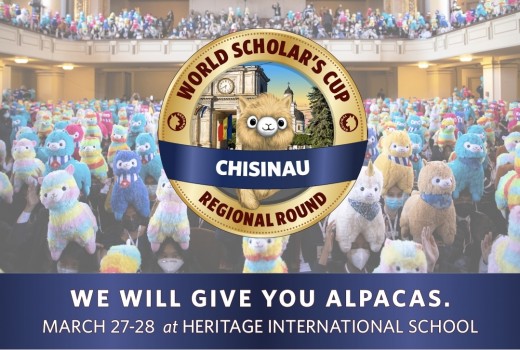
The international “World Scholar’s Cup” competition returns for the sixth consecutive year to Heritage International School, where all students from schools across the Republic of Moldova are invited